
Comparing LAUSD Enrollment Options: What You Need to Know
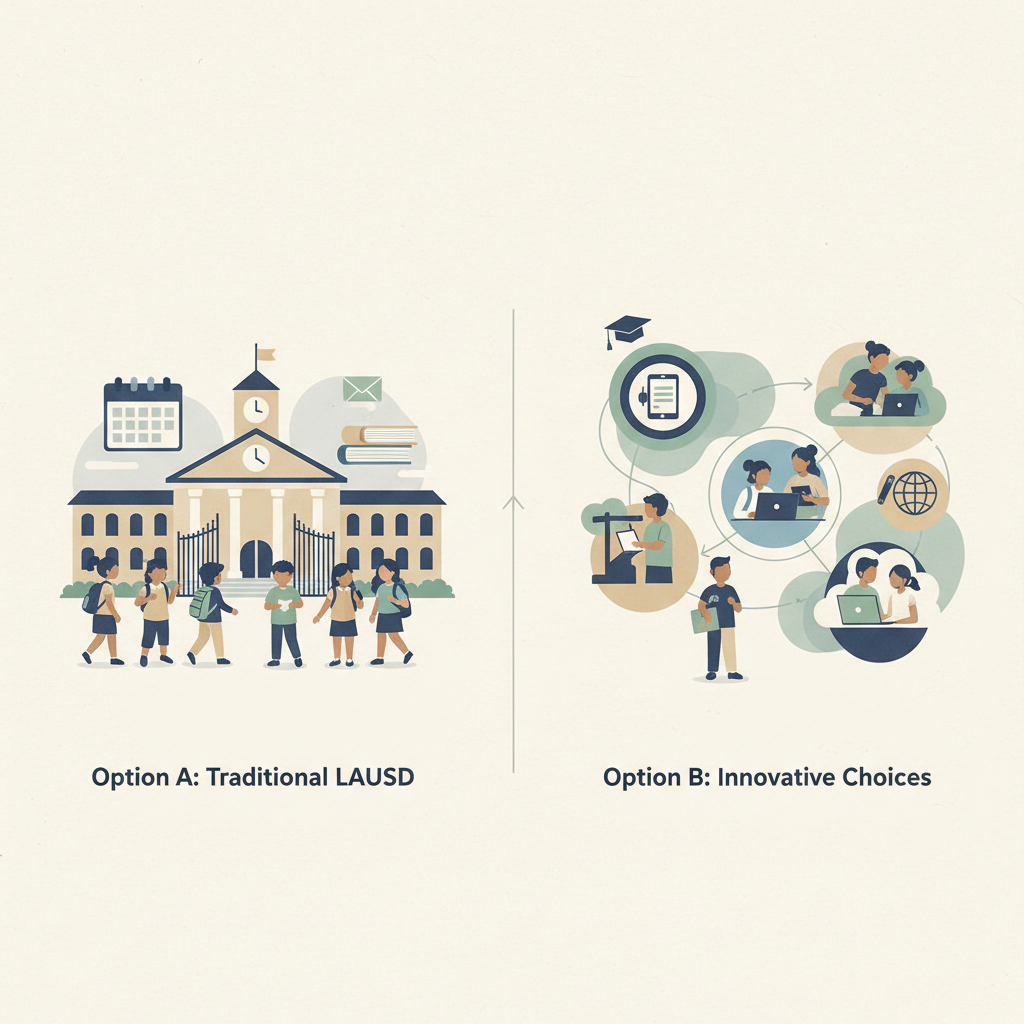
Navigating the Los Angeles Unified School District (LAUSD) enrollment landscape can be a complex endeavor for parents and guardians. With a diverse array of options designed to meet various student needs, understanding the distinctions between each pathway is crucial for making informed decisions. This guide provides a comprehensive comparison of the primary LAUSD enrollment options available for the 2026-2027 school year, detailing their core concepts, practical methodologies, success metrics, and key considerations.
Historically, school enrollment was largely dictated by a student’s residential address, assigning them to their neighborhood school. While this remains a fundamental option, LAUSD has progressively expanded its offerings to promote educational equity, specialized learning, and parental choice. This evolution began in earnest with the introduction of magnet programs in the 1970s as a desegregation tool, and has since grown to include charter schools, permits, and other choice-based initiatives. The goal is to provide a rich educational ecosystem that caters to diverse learning styles, interests, and family circumstances while supporting long-term student success through various performance metrics.
The LAUSD enrollment process is typically a multi-stage procedure, often beginning in the fall of the preceding school year for the subsequent academic year. Key deadlines, such as those for magnet applications or permit requests, are critical and vary by program. Families are encouraged to familiarize themselves with the LAUSD enrollment calendar, usually accessible through the district’s official website, to ensure timely application submissions. Understanding LAUSD school choice mechanisms and LAUSD transfer options are integral components of this process, allowing families to explore alternatives beyond their assigned neighborhood school.
LAUSD Geographic and Administrative Boundaries
The Los Angeles Unified School District (LAUSD) is the second-largest public school district in the United States, serving a wide urban area that includes the city of Los Angeles and several surrounding communities. Its boundaries cover a vast geographic area, which includes both densely populated urban zones and more suburban regions. This diversity impacts the enrollment choices available to families, as certain programs and schools are only accessible to residents within specific parts of the district.
Administratively, the LAUSD is governed by the LAUSD Board of Education, which sets policies and oversees district goals and operations. The Board is composed of elected members representing seven distinct districts within the LAUSD boundaries. Each member advocates for the interests of their constituents, influencing decisions on curriculum, budgeting, and district-wide initiatives, which in turn affect enrollment options and program availability.
LAUSD Enrollment Options Comparison Table
| Feature | Resident School Enrollment | Magnet Programs | Charter Schools | Permit With Transfer (PWT) | Online & Hybrid Learning |
|---|---|---|---|---|---|
| Core Concept | Automatic assignment based on home address. | Specialized, theme-based programs promoting diversity. | Independently operated public schools with unique educational approaches. | Allows students to attend a school outside their resident zone. | Flexible learning models, primarily digital instruction. |
| Application Process | Direct registration at school. | Online application via Choices/eChoices portal, lottery-based. | Direct application to individual charter schools. | Application to LAUSD Pupil Services, approval based on space/criteria. | Application through specific LAUSD online academies. |
| Eligibility | Residency within school’s attendance boundaries. | Open to all LAUSD students, no academic prerequisites for most. | Open to all students, specific charters may have focus areas. | Based on specific district criteria (e.g., childcare, unique programs, medical). | Varies by program; often includes residency and sometimes academic criteria. |
| Transportation | Generally parent responsibility; some walk zones. | Limited yellow bus transportation provided for some programs/distances. | Generally parent responsibility. | Parent responsibility. | N/A (home-based or limited campus visits). |
| Curriculum | Standard LAUSD curriculum. | Themed curriculum (e.g., STEM, Arts, Global Studies). | Varies widely by charter, often innovative or specialized. | Standard LAUSD curriculum of the receiving school. | Digitally delivered curriculum, often self-paced or synchronous. |
| Governing Body | LAUSD Board of Education. | LAUSD Board of Education. | Independent governing board, authorized by LAUSD or county. | LAUSD Board of Education. | LAUSD Board of Education. |
| Class Size | Varies by school, generally larger classes. | Typically smaller, varies by program. | Often smaller, allows more personalized attention. | Varies by receiving school. | Not applicable; varies by virtual program design. |
| Success Metrics | Standardized testing, district assessments. | Integration balance, academic achievement. | Performance goals set by charter agreements. | Transfer success rates, district assessments. | Completion rates, student satisfaction. |
| Deadline (2026-27 est.) | Ongoing (for new residents), early spring for transfers. | Fall 2025 (e.g., October/November). | Varies by charter, often Fall/Winter 2025. | Early spring 2026 (e.g., March/April). | Varies by program, often late spring/early summer 2026. |
Financial Considerations in LAUSD Enrollment
When evaluating different enrollment options within the LAUSD, financial considerations and potential costs are crucial for families to consider. Although public education is typically tuition-free, some programs and options may incur additional costs. For example, families considering charter schools should explore if there are any additional fees for specific resources or extracurricular activities. Similarly, certain application processes, like Permit With Transfer requests, might require specific documentation that could incur charges (e.g., medical records, notarized statements).
Moreover, transportation costs are often borne by the family, especially when students enroll in schools outside their immediate neighborhood. Understanding these potential expenses alongside educational benefits is essential for making an informed decision.
Case Studies and Family Experiences
Many families have navigated LAUSD’s diverse enrollment options with varying experiences. For instance, one family from Silver Lake opted for a magnet program focusing on environmental sciences due to their child’s interest in sustainability. This experience led to enriched academic exposure and unique extracurricular learning opportunities. Meanwhile, another family found that their child’s specific learning needs were best met through a charter school with a customized STEM curriculum, enhancing their performance and satisfaction.
Families are encouraged to share and seek shared experiences within community forums and discussions to better understand the practical implications of each enrollment path. Such interactions can provide insight into daily logistics, community culture, and unexpected advantages or challenges.
Community-Based Programs and Partnerships
In addition to school-based options, LAUSD collaborates with various community-based organizations that supplement educational offerings. For example, after-school programs provided by local non-profits offer tutoring, arts, and sports, aligning with the district’s broader educational objectives. Such partnerships can be vital for families looking to extend their child’s learning beyond traditional classroom hours.
Researching available community partnerships can reveal additional resources and enrich the educational experience, providing comprehensive development for students.